Bailey's Bridges Podcast episodes
Our Recent Podcast Episodes

In the final episode of Teenagers Left Behind After a Parent Dies by Suicide, we explore how grief can change as a teenager grows. Milestones can bring a loss back in new ways because we often re-grieve as we grow, understanding the loss differently at each stage of life. This episode explores continuing bonds, identity, and what healing can look like when the goal isn’t forgetting, but learning how to carry someone you love while continuing to build a life of your own.
Your parent’s death may always be part of your story. But it does not get to write every chapter that comes next.
Teenagers Left Behind After a Parent Dies by Suicide:
Part 3: Carrying Them With You While Building a Life of Your Own
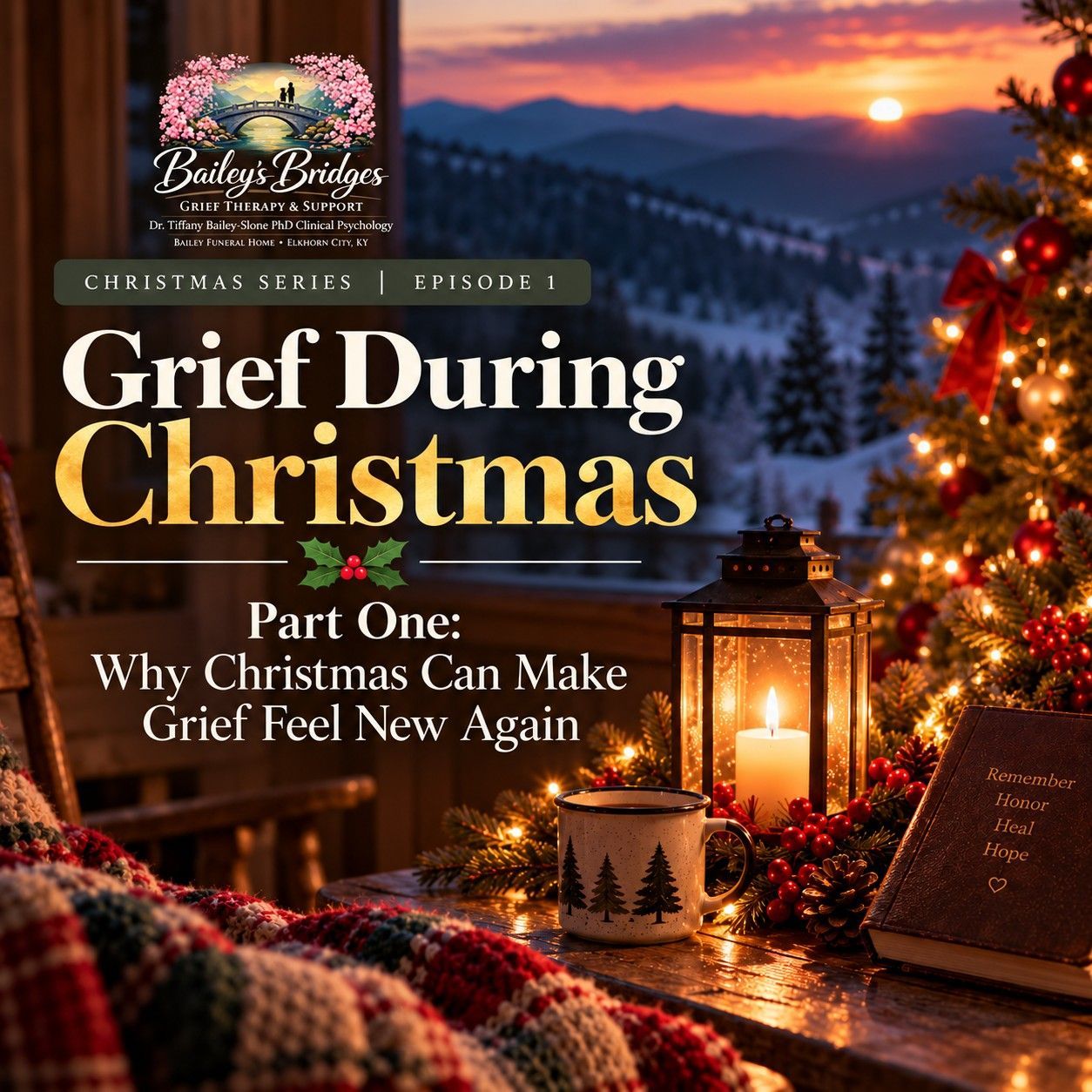

When the Most Wonderful Time of the Year Doesn’t Feel So Wonderful
Part 1: Why Christmas Can Make Grief Feel New Again
Why does Christmas sometimes bring grief rushing back, even years after losing someone we love? In Part One of our Grief During Christmas series, Dr. Tiffany Bailey-Slone explores the psychology behind holiday grief, including how familiar traditions, Christmas music, sights, and smells can activate powerful emotional memories. We'll also examine anniversary reactions, secondary losses, and why anticipating Christmas can sometimes be more difficult than the holiday itself. Most importantly, this episode explains why experiencing renewed sadness during Christmas doesn't mean we've lost the progress we've made in learning to live with loss. The return of grief doesn't mean the absence of healing.

When Life Changes Without Warning
Part Three: “A Life Large Enough to Hold Both”
In the final episode of When Life Changes Without Warning, we explore how to integrate the life we shared with someone who died into the life we are building today. Through psychological concepts such as continuing bonds, attachment, family systems, and identity integration, we examine the emotional complexities of remarriage, blended families, and maintaining meaningful connections with those we've lost. We also address loyalty conflicts, the coexistence of grief and happiness, and the possibility of personal growth without glorifying tragedy. Ultimately, this episode reminds us that loving again does not mean loving less, moving forward does not require leaving someone behind, and the life we build after loss can be large enough to honor both our past and our present.

When life Changes Without Warning: Part 2 "I Didn't Just Lose You"
Part Two explores the losses that extend beyond the death itself, including changes in identity, relationships, daily routines, and the future we imagined. We examine why children re-experience grief as they grow, how the Dual Process Model explains our movement between grieving and rebuilding, and why happiness can sometimes bring unexpected guilt. This episode also addresses social expectations surrounding grief, the importance of continued support, and meaning reconstruction—learning to build a meaningful life while honoring the person we've lost. Moving forward does not require forgetting, and experiencing joy does not diminish the depth of our love.

When Life Changes Without Warning: Part 1 "But They Were Just Here"
Why does our mind continue expecting someone to come home even when we know they have died? In Part One, we explore the psychological impact of sudden and unexpected death, including shock, disbelief, and the relentless “what if” questions. Through an examination of grief, trauma, attachment, and our need for predictability, this episode explains why our minds can struggle to accept a reality that changed without warning and how we gradually begin adapting to life after sudden loss.

Teenagers Left Behind After a Parent Dies by Suicide:
Part 3: Carrying Them With You While Building a Life of Your Own

In the final episode of Teenagers Left Behind After a Parent Dies by Suicide, we explore how grief can change as a teenager grows. Milestones can bring a loss back in new ways because we often re-grieve as we grow, understanding the loss differently at each stage of life. This episode explores continuing bonds, identity, and what healing can look like when the goal isn’t forgetting, but learning how to carry someone you love while continuing to build a life of your own.
Your parent’s death may always be part of your story. But it does not get to write every chapter that comes next.

Teenagers Left Behind After a Parent Dies by Suicide:
Part 2 When Loss Follows You Back Into Life
Part Two explores what happens when a teenager who has lost a parent to suicide has to step back into a world that has already started moving again. This episode looks at the difference between guilt and actual responsibility, navigating school, friends, stigma and unwanted questions, and the fear that a parent’s suicide somehow predicts the teenager’s own future. It also focuses on something easily forgotten in the midst of such a devastating loss: they are still allowed to be teenagers. They can laugh, have fun, make plans and look forward to their future without betraying the parent they lost. Joy is not a betrayal of grief, and moving forward does not mean leaving someone behind.

Teenagers Left Behind After a Parent Dies by Suicide:
Part 1 Questions They May Be Afraid to Ask
In Part One of this special three-part Bailey’s Bridges series, we explore the difficult and often unspoken questions teenagers may carry after losing a parent to suicide (the whys, the if onlys, conflicting emotions, anger, and the painful sense of abandonment that can lead a young person to wonder, “If my parent loved me, why wasn’t I enough for them to stay?” I talk about making room for these complicated feelings without judgment, giving anger a safe place to go, and helping teenagers understand one important message: You were never supposed to be the cure. You were their child. That was enough.

Why Funeral Rituals Matter: More than Saying Goodbye
In episode one of Bailey's Bridges, Dr. Tiffany Bailey-Slone explores some of the psychology behind Appalachian funeral rituals and reveals how these timeless traditions help us face loss, find comfort in community, preserves the stories of those we love, and begin the journey toward healing.